

From Palm Groves to Desert Markets: Inside Siwa’s Date Harvest Tradition

As the sun slowly rises over the Siwa Oasis, long shadows stretch across endless rows of palm trees. Before the desert heat intensifies, farmers begin moving through their fields, preparing for one of the most important seasons of the year: the date harvest. In Siwa, dates are far more than a seasonal crop. They represent a major source of income, a pillar of the local economy, and a symbol of life in the desert community.
For farmer Abdo, the harvest season begins long before the dates are picked. His day starts early in the morning as he gathers workers and heads to factories to collect plastic bags and large mats used during harvesting. Back in the fields, experienced workers climb the towering palm trees with remarkable speed and precision, carefully cutting clusters of dates before letting them fall onto mats spread across the ground.
Abdo explains that using mats is essential because Siwan farmers traditionally avoid using chemicals in cultivating their dates. Allowing the fruit to fall directly onto the soil could damage its quality and cleanliness. The harvest season usually begins in August and reaches its peak in October, when the palm trees are heavy with ripe dates ready for collection.
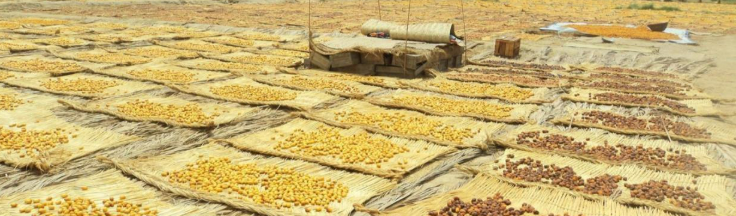
Once harvested, the dates are carefully sorted into three categories based on quality. The first category includes the highest-quality dates, which are sold at the highest prices. The second category consists of medium-grade dates sold at lower prices, while the third category is generally reserved for animal feed. According to Abdo, farmers once relied entirely on woven palm mats during the harvest process, but many now use white plastic mats for premium dates because they are easier to clean and maintain. Traditional palm mats, however, are still commonly used for lower-grade harvests.
Nearby, craftsman Ahmed Gamal continues another side of Siwa’s long-standing relationship with palm trees. Gamal specializes in making furniture and traditional products from palm materials, including the woven mats used during harvest season. He explains that these mats play a crucial role in protecting freshly picked dates from bruising or crushing when they fall from the trees.
For Gamal, the process reflects how every part of the palm tree remains valuable within Siwan culture. Palm trunks, leaves, and fibers are transformed into furniture, baskets, mats, and household products, connecting traditional craftsmanship directly to agricultural life. His work highlights the deep relationship between local industries and the annual harvest season.

After collection and sorting, the dates move to the next stage of preparation and distribution. Date merchant Ahmed Mohamed explains that the harvested dates are first stored in refrigerators before undergoing a process known locally as evaporation, which helps preserve the fruit and improve its texture. The dates are then prepared, carefully packaged, and sent to markets inside and outside Siwa.
Mohamed says the industry also provides work opportunities for many families across the oasis. Men are generally responsible for physically demanding tasks such as climbing trees, carrying harvests, and transportation, while women are heavily involved in sorting and packaging the dates. Their attention to detail and patience make them particularly skilled in preparing the products for sale.
Although responsibilities and wages may differ, Mohamed believes the harvest season remains a collective effort that supports the wider community. Entire families often participate in different stages of production, reflecting the cooperative spirit that continues to define life in Siwa.
From Abdo’s early mornings in the palm groves to Ahmed Gamal’s protective mats and Ahmed Mohamed’s packaging process, the story of Siwa’s date harvest is ultimately a story of people, tradition, and survival in the desert. Dates are deeply woven into everyday life in the oasis, serving not only as a source of nutrition and energy but also as a central ingredient in local recipes such as jams, biscuits, milk-based dishes, and traditional Siwan foods including Teglantini, Hogy, and Tartant. In Siwa, dates are not simply an agricultural product. They are a cultural identity, an economic lifeline, and a tradition passed down through generations, helping preserve both the community’s heritage and its connection to the desert landscape.


