
A Night on Al-Moez Street: Music, Heritage, and the Pulse of Cairo
Updated: Mar 8

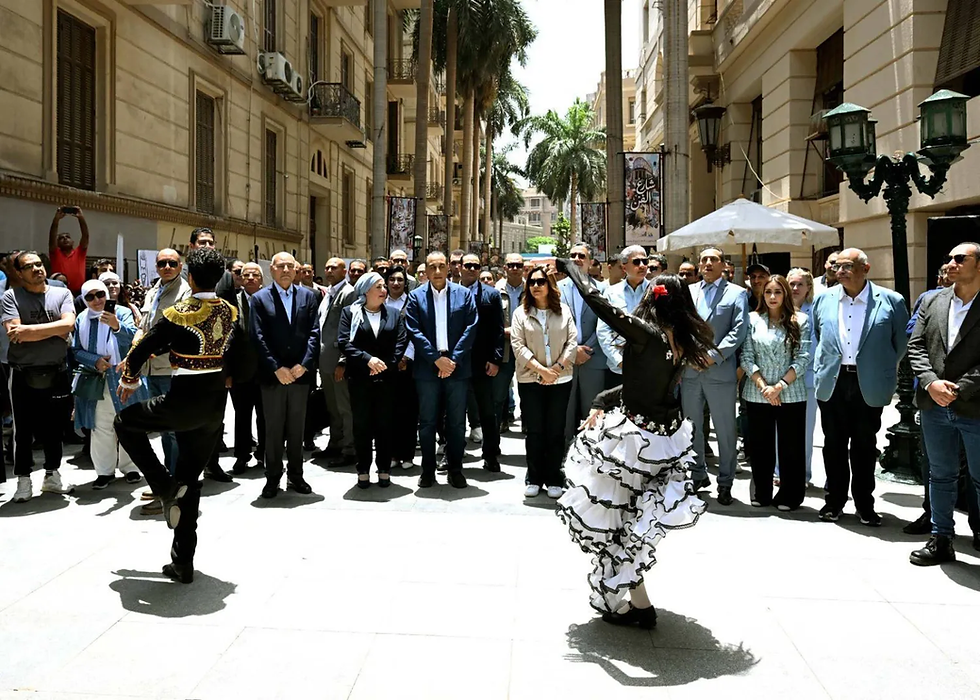
As the evening air chills slightly over Cairo, Al-Moez Street begins to glow. Twinkling lights hang above the cobblestones, lanterns sway with the gentle breeze, and the scent of roasted coffee and sweet pastries drifts from the cafés lining the historic alley. The street is alive, not just with people, but with music, echoes of centuries-old melodies meeting the cheers of a city ready to welcome a new year.
At Al-Fishawi Café, the familiar sound of the oud fills the air. Sayed El-Awad, an oud player at the cafe who has spent nearly three decades mastering and preserving authentic Egyptian music, plucks the strings with practiced precision. His tunes carry the weight of tradition, weaving together Christmas melodies, classics by Abdel Halim Hafez, Umm Kulthum, and Warda, and even songs that tell the story of daily life and struggles in Egypt. “Music is more than entertainment,” he says, eyes focused on the instrument. “It is a way to educate visitors, to share our culture and history with anyone willing to listen.”
Outside, the crowd moves like a living audience, stopping, swaying, and letting the music draw them in. Mohamed, a regular visitor, watches from a corner, his gaze tracing the historic facades above him. “It is not just about listening,” he says. “You feel the street’s heartbeat. You feel the history and the culture with every note.”
Further down, at Umm Kulthum Café, Ezzat and Osama, members of a musical band performing at the cafe tune their instruments and prepare for their set. The band selects songs carefully, balancing the traditional with the familiar, ensuring every note resonates with locals and visitors alike. A child from Bahrain hums along to “Alf Leila W Leila,” while a memory lingers of French President Emmanuel Macron, who once requested “Ana B’ashaqak” by Mayada Elhanawi. These moments illustrate the reach of Egyptian music, connecting hearts across cultures without words.
Walking along Al-Moez Street tonight is like stepping into a living museum. Music blends with the chatter of locals, the laughter of tourists, and the smell of Cairo’s streets in winter. Here, time feels suspended; the past and present meet as one. Every melody, every note, every gesture is part of a narrative that has traveled generations, and on this New Year’s Eve, it reaches each passerby.
By the end of the night, Al-Moez Street is more than a street. It is an orchestra, a classroom, a stage, and a memory. Egyptians and visitors alike leave carrying fragments of its rhythm in their hearts, a reminder that heritage is not just preserved in books or museums, but lived, sung, and felt in the streets of Cairo.