
Street of Art: When Downtown Cairo Becomes an Open-Air Gallery
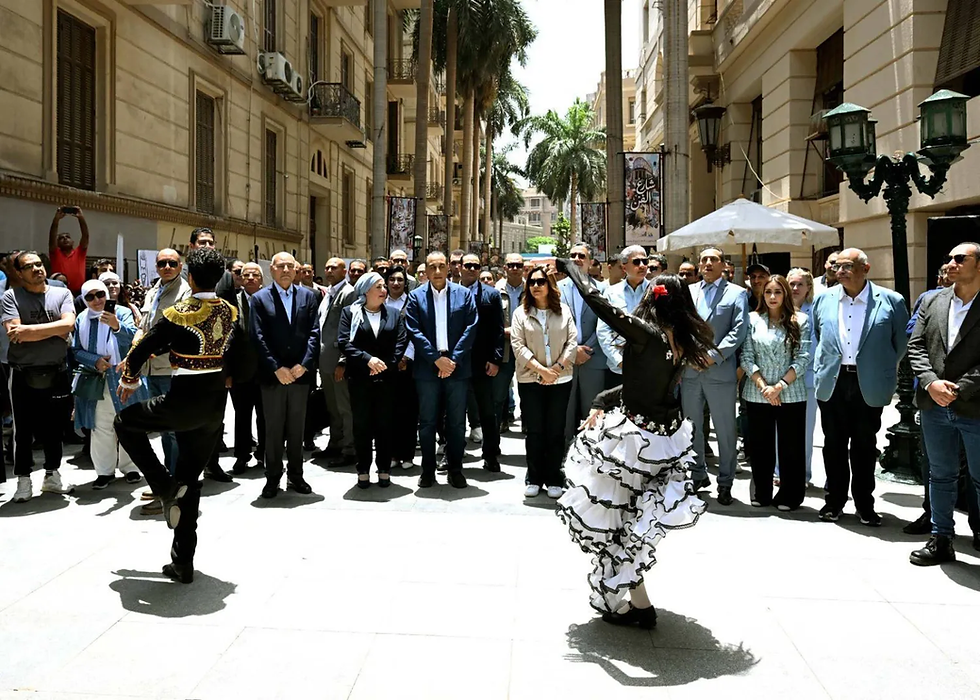
In the middle of downtown Cairo’s usual rush, something different begins to happen. Music spills into the streets, colors take over the sidewalks, and people slow down, not because they have to, but because the space itself feels different.
Through the “Street of Art” initiative, the Borsa area and Sherifain Street in downtown Cairo are temporarily transformed into an open-air space for creativity, where art steps out of galleries and becomes part of everyday life. The initiative is part of broader efforts to revive downtown Cairo and reimagine it as an accessible cultural hub. Artists from different disciplines came together to present their work in painting, photography, pottery, music, and live street performances, all unfolding in one shared public space.
For participating artist Aya Hussein, the experience felt completely different from traditional exhibitions. She said the street setting created a more direct relationship between artists and the public.
“It feels more direct here,” Hussein said. “In galleries, people come specifically to see art. Here, art meets people who didn’t expect it.”
Hussein learned about the initiative through the Art Egypt platform, which connected artists with the event and facilitated their participation. What stood out most for her was the immediate reaction from people passing through the street.
“People don’t just watch,” she said. “They ask questions, react, and sometimes engage in real conversations about the work. Everything happens instantly.”
For Hussein, this kind of interaction changes how artists see their own work. Unlike a gallery setting, where visitors are already prepared to engage with art, the street offers real-time feedback from a diverse and unfiltered audience.
From the audience side, visitor Youssef Shabaan described the event as unexpectedly refreshing. He said the atmosphere made downtown Cairo feel different from its usual rhythm of traffic, movement, and daily business.
“It doesn’t feel like a traditional event,” Shabaan said. “It feels like the city is breathing differently.”
Shabaan moved between performances and artworks, observing how people engaged with the artists and with each other. For him, downtown Cairo was temporarily redefined, not only as a place people pass through, but as a space for cultural expression.
He also pointed to the diversity of participants and visitors, including young artists, families, and people from different backgrounds and nationalities. This diversity, he said, gave the event a more inclusive and open character.
Photographer Haneen Mohamed, who documented the event, described “Street of Art” as more than an open exhibition. For her, it was a shared social moment shaped by sound, movement, people, and creativity.
“What stood out wasn’t one specific artwork,” Mohamed said. “It was how everything came together: sound, movement, people, and art in one space.”
Mohamed recalled moments when families stopped in the middle of the street to watch performances and children interacted freely with the activities. She said these small scenes showed how art can naturally become part of public life when it is made accessible.