

At Abou Tarek’s Counter, Koshary Tastes the Same as It Always Has
Updated: Mar 8
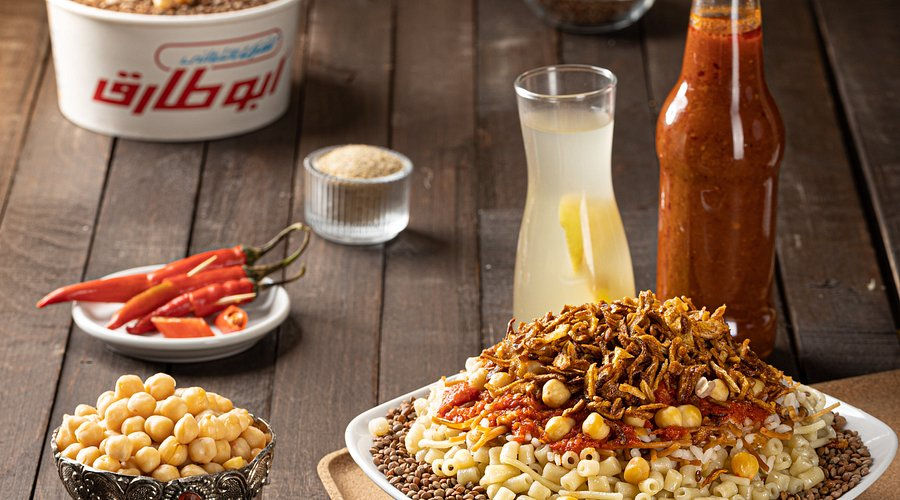
After Egypt’s beloved koshary was recognized as part of the country’s cultural heritage by UNESCO, the idea suddenly felt obvious. Some foods are cooked; others are inherited. In downtown Cairo, at the serving counter of Abou Tarek, koshary is not presented as a trend or a rediscovered classic. It is served the same way it always has been, as if nothing in the world has changed.
The street outside never really rests. Cars crawl, footsteps overlap, and voices rise from every direction. Inside, the counter becomes a pause. Plates move forward. Steam lifts from rice and lentils that have been prepared countless times before. Here, time is not marked by clocks but by orders shouted and answered, by bowls filled and handed over, by the quiet certainty that this dish will taste exactly as it did years ago.
“This place started with a cart,” says Ashraf Khalil, operations manager at Abou Tarek, gesturing toward the space as if the past is still standing beside him. The story dates back to the 1930s, when Hajj Youssef Zaki, known simply as Abou Tarek, learned the trade from his ancestors and brought it to the streets. By the early 1950s, the small koshary cart parked below became a daily destination. What stands today, a five-floor restaurant, grew not by changing the recipe, but by refusing to touch it.
At the counter, the ingredients wait in their metal containers, unchanged and uncompromised, rice, pasta, lentils, chickpeas, fried onions, and tomato sauce. No preservatives. No shortcuts. “Everything is fresh,” Khalil insists. “The oil is crystal. The pasta is of the highest quality. The tomatoes are organic, always hot, always heavy, you can taste them.” He says the ingredients are the only part of the process that must never be negotiated. “These things cannot change.”
The counter is where that commitment becomes visible. Each plate is assembled with practiced speed, yet no two orders are rushed. A quick question, “Chilli?”, is all the customization needed. Koshary, here, does not perform. It reassures.
Hossam Eldin Abdelwahab, the downtown branch manager, describes the decision to keep the dish untouched as intentional, almost moral. “People come here and say it tastes exactly like it did 20 or 30 years ago,” he says. “That is not nostalgia. That is discipline.” The same suppliers, the same method, the same hands training the next generation in the kitchen. For him, the secret is not hidden. “It is the conscience,” he says.
That sense of responsibility extends beyond the plate. Abou Tarek is not just a restaurant; it is a familiar landmark. Families stop in after shopping nearby. Friends “snatch” a quick meal between their outings. For many Egyptians, koshary is not a choice but an instinct. Hungry? “Lets go koshary.” Cheap, filling, and comforting, it belongs equally to students, workers, and visitors who have learned quickly that this dish explains Egypt better than words.
Despite its global reach, Abou Tarek remains rooted in its street. Foreign delegations, ambassadors, and tourists line up at the same counter, eating the same dish, standing where generations of Cairenes have stood before them. The restaurant has expanded through carefully controlled franchises, but Khalil explains that the name alone is not enough. “If the quality is not right, we do not continue. The chefs come from here. The conscience comes from here.”
The story of Abou Tarek is also the story of focus. One dish. One recipe. No distractions. No menus crowded with options. “He chose one plate and perfected it,” Khalil says. “That’s why it reached the world.”
With the news of UNESCO recognition reaching Abou Tarek, the counter received it the same way it receives everything else, without spectacle, but with quiet pride. The announcement did not change the routine, yet it gave it a name. What had always been served as a daily meal was suddenly recognized as heritage. The pots are still burning, the tomatoes continued to bubble, and the plates still passed from hand to hand, but now with the understanding that this ordinary act carried national value.


