

Between Street Drums and Modern Photoshoots: How Egypt’s Traditional Wedding "Zaffa" Continues to Evolve
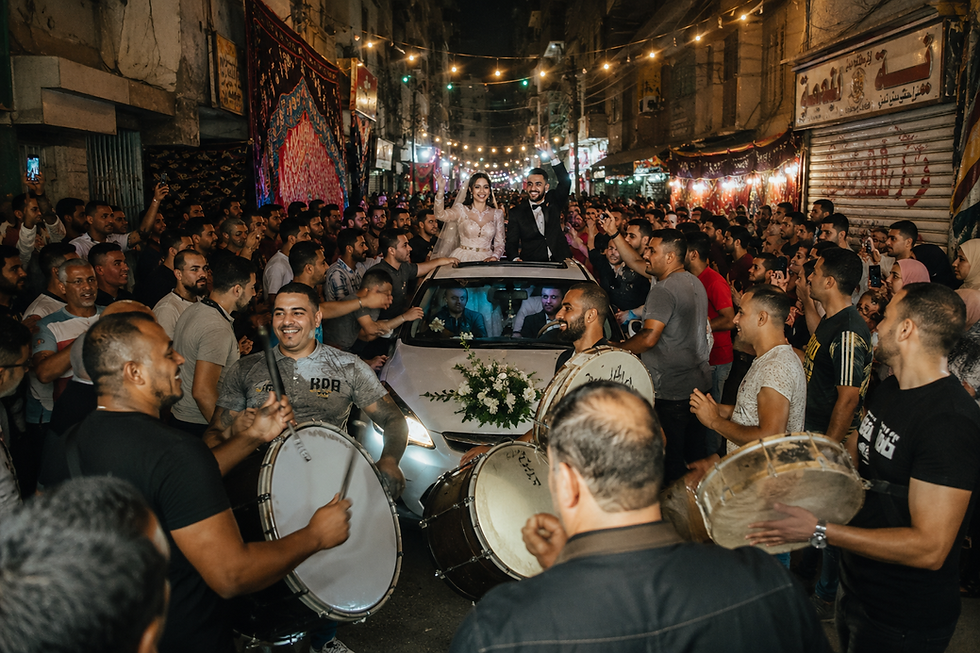
From improvised street celebrations to curated photoshoots, the Egyptian zaffa, the traditional wedding procession, continues to occupy a unique place in the country’s collective memory. More than a musical parade, the zaffa has long served as a public declaration of joy and the symbolic beginning of married life. Yet between past and present, the ritual has undergone noticeable transformations, particularly in working-class neighborhoods where economic realities and changing social norms have reshaped the way weddings are celebrated.
In neighborhoods such as Imbaba, the zaffa once represented a deeply communal experience that blurred the boundaries between private and public celebration. According to resident Ahlam Raafat, the essence of the procession has always been tied to making the marriage visible to the surrounding community, particularly in cases where families could not afford large wedding ceremonies or banquet halls.
Raafat explains that many families would organize a procession even without holding a formal wedding reception. In some cases, the bride would return from the hairdresser or a photoshoot accompanied by drums, singing, and dancing in the street until she reached her home. For residents, the procession functioned as an announcement that a new couple had joined the neighborhood and that the marriage was publicly recognized.
She notes that the scale and style of the zaffa traditionally depended on the financial capabilities of each family. While wealthier families hired professional bands and elaborate musical performances, others relied on relatives, neighbors, and friends to sing and celebrate together. In earlier decades, some processions even included horses and decorated carriages, adding a festive spectacle to the narrow streets of popular neighborhoods.
However, Raafat believes many of those traditions have gradually disappeared. She recalls a time when entire streets would transform into wedding venues, especially for families unable to rent expensive clubs or halls. Residents would erect makeshift tents similar to funeral marquees, decorate the streets with lights, and set up small stages for music and dancing. Today, she says, celebrations have become more restrained and fragmented. Families with limited means increasingly opt for a simple marriage contract ceremony at a mosque followed by photographs, with fewer large public gatherings taking place in the streets. According to Raafat, the zaffa itself now often appears only as a symbolic public announcement after ceremonies held elsewhere.
From another perspective, Saif Sabri, widely known as “Hamasa” and known for organizing wedding processions, describes how the profession itself has evolved alongside changing public tastes. He says the traditional zaffa has always relied on energy, rhythm, and the ability to attract attention in crowded neighborhoods, making spontaneity and interaction with the public essential parts of the performance.
He explains that organizing modern processions now requires specialized equipment, careful coordination, and an understanding of visual presentation to ensure the bride and groom stand out during the celebration. According to Sabri, today’s couples often seek processions that combine music, movement, and spectacle in ways that reflect contemporary trends and social media culture.
Sabri points out that older processions depended primarily on simple drums and folk instruments, while newer celebrations increasingly incorporate lighting effects, decorated vehicles, smoke machines, and choreographed entrances. In his view, the modern zaffa has gradually transformed from a spontaneous neighborhood ritual into a carefully designed performance intended to match the expectations of younger generations.
Despite these transformations, the traditional wedding procession continues to reflect broader social realities within Egyptian working-class communities. Between the old street gatherings that once united entire neighborhoods under one tent and today’s highly curated celebrations centered around photography and visual presentation, the zaffa remains a living symbol of collective joy and social belonging.
Although the form of the procession has evolved, from horses and folk drums to luxury cars and enclosed wedding halls, its central purpose remains largely unchanged. Whether through music echoing through narrow streets or celebratory convoys moving between neighborhoods, the zaffa continues to transform private happiness into a public moment shared by family, neighbors, and the wider community, preserving a sense of social warmth amid rapidly changing urban life.


