
From Displaced Landscapes to Egypt: Executive Regulations Issued to Regulate Refugee Status and Govern Asylum Rights
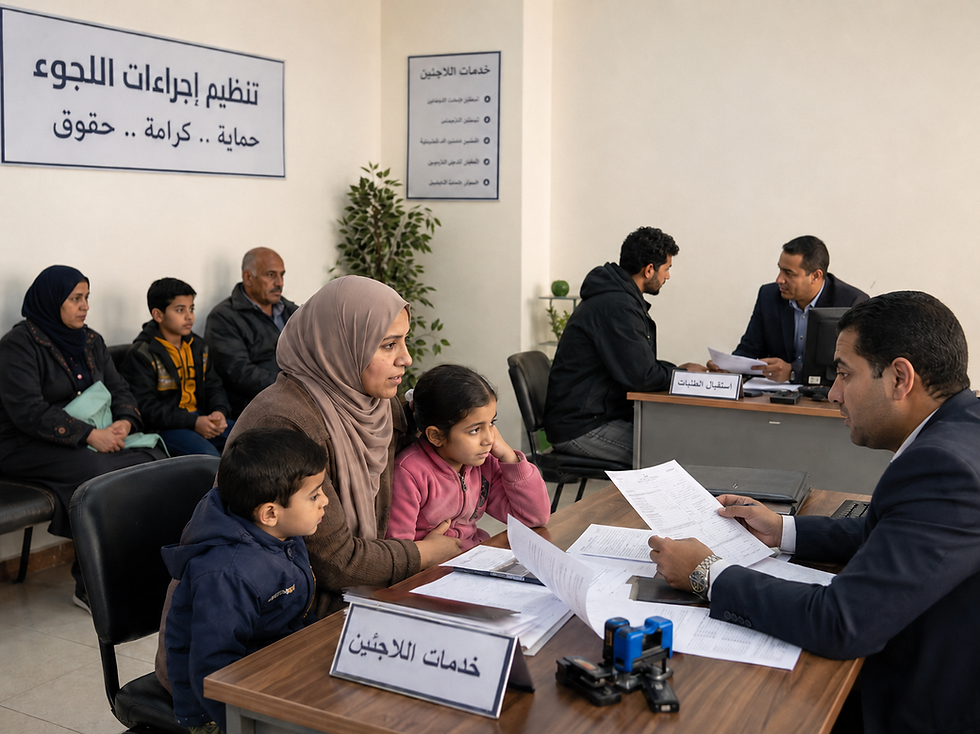
Across the communities and residential areas hosting displaced families throughout Egypt, a new phase of regulatory oversight has officially begun following the issuance of the executive regulations for the new law governing refugee affairs and the granting of asylum rights. This structural step aims to regulate the status of refugees in Egypt and define procedures, rights, and obligations more clearly. The newly activated framework is designed to achieve a precise balance between humanitarian considerations and the requirements of security and administrative organization across the country.
The practical execution of these newly published guidelines introduces clear legal pathways for all involved parties. Dr. Saber Abdel Aziz, Professor of Law at the Faculty of Law, Helwan University, affirms that the executive regulations represent the practical stage of implementing the law on the ground. He explains that they precisely define the competent authorities, the required procedures, and the established timelines for reviewing and deciding on applications, thus providing greater transparency and clarity for all concerned parties.
Abdel Aziz points out that the new regulations achieve mutual benefits for both the state and refugees. He adds that they contribute to building a more accurate and organized database of residents, which supports planning and management efforts, “while simultaneously providing refugees with a clear legal framework that protects them from exploitation and ensures they receive their rights in accordance with the established rules.”
For displaced families living within the host country, this regulatory formalization directly addresses long-standing daily anxieties. Raja Ahmed, a Palestinian refugee living in Egypt, said that clear rules and procedures provide refugees with greater psychological stability. She explained that clarity regarding rights and responsibilities helps families plan their lives better, free from the anxieties associated with changing or unclear procedures.
Ahmed noted that organized employment opportunities and access to basic services are among the top priorities for refugees who wish to become self-reliant and contribute to the society in which they live.
The stabilization of these administrative mechanisms is expected to positively impact the family structures of residents seeking access to vital public infrastructure. Iman al-Najjar, another Palestinian refugee, considered the new regulations an important step towards strengthening the sense of legal security, especially regarding the stability of families residing in Egypt.
Al-Najjar explained that the clarity of procedures related to education and healthcare would alleviate many of the challenges facing refugees and help their children integrate better into society.
Observers believe that the issuance of the executive regulations represents an important step towards managing the asylum file in a more organized manner. By achieving a balance between providing protection for those fleeing conflicts and humanitarian crises and maintaining the requirements of security and stability within the country, the new framework establishes a structured environment where rights and obligations are clearly defined for everyone involved.