
Abdeen Palace’s Salamlek: How Diplomacy Evolved From Kings to Republic
Updated: Mar 8
Have you ever wondered how diplomacy once unfolded in the ornate halls of a palace, where every gesture, table, and chandelier spoke volumes about power? In the heart of Cairo, Abdeen Palace’s Salamlek, the official, public wing of the palace, offers a living chronicle of Egyptian governance, tracing the arc from monarchical authority to modern state institutions.
For Khedive Ismail, who commissioned Abdeen Palace in 1863, the goal was to signal a thoughtful change in governance. The Citadel of Salah El-Din, fortress-like and forbidding, was too political, too military. Nevine Abbas, a tour guide at Abdeen Palace, says, “Ismail wanted a residence which spoke to elegance, modernity, and openness rather than military authority.” Abdeen Palace was designed not just as a seat of power but as a visual statement of modern governance, a palace where rulers could mingle with their people and conduct diplomacy in a civil, ceremonious style.
Dr. Abdel Baky Elsayed, Professor of Islamic History at Ain Shams University, adds, “In Abdeen Palace, royal governance, grand celebrations, and the daily life of the Alawiyya family took place. The palace witnessed significant historical events, and today it houses museums displaying the royal family’s treasures, from silverware to porcelain, allowing the public to explore Egypt’s modern history.”
Khedive Ismail’s vision extended to the construction itself. He purchased the lands surrounding the original Abdeen house, demolished it, and oversaw the building of a grand palace spanning 24 acres with 500 rooms, completed in 1874. International architects and designers contributed to its creation, blending Ottoman ceremonial tradition with European royal sophistication. “The Salamlek section, or Peace Department, was deliberately planned to receive official guests, from European ambassadors to Ottoman representatives,” says Dalia Ahmed Sadka, freelance tour guide. “Even the term ‘Salamlek’ is Ottoman in origin, and the ceremonial protocols merged Ottoman methods with European royal literature.”
The Salamlek was more than decorative; it was a functional center of diplomacy. As Nora Ibrahim, a tour guide at the palace, states, “The Salamlek played a major part in defining Egypt’s diplomatic presence across different historical periods. During the Khedival and Royal eras, diplomacy was personal and centered on the ruler. Ceremonies, ambassador receptions, and treaty negotiations were all conducted in this public wing, following a highly ceremonial style influenced by both Ottoman and European courts.”
However, the palace’s role evolved. During the British occupation, real power shifted away from Abdeen, and its diplomacy became largely symbolic. Ibrahim says, “Although the Salamlek continued to host official receptions, authority was exercised elsewhere. With Egypt’s independence in 1922, the Salamlek regained importance. It hosted official banquets, foreign delegations, and treaty ceremonies under Kings Fuad I and Farouk, institutionalizing diplomacy while still retaining its royal character.”
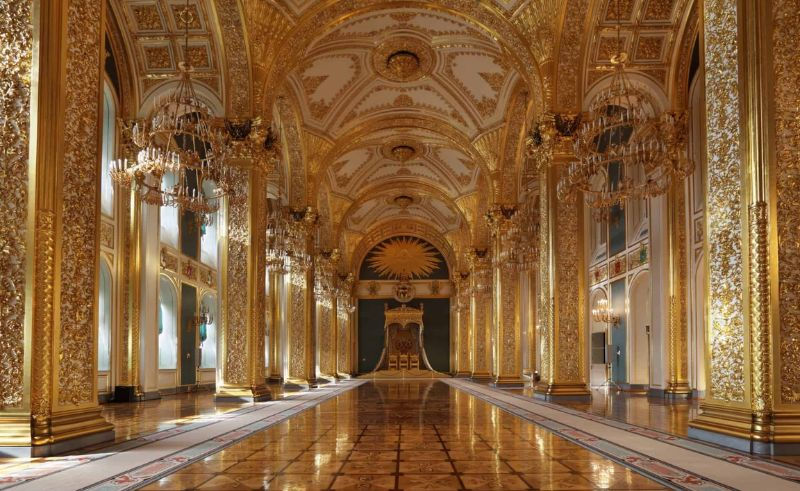
Even the interior design reflects this blend of ceremonial and symbolic authority. Nevine Abbas highlights the Throne Hall as the palace’s most significant space: “The Throne Hall is purely European in design and hosts ceremonies. The Mohamed Ali Hall contains images, medals, and personal belongings of the royal family, giving visitors insight into how these rulers lived, both publicly and privately.”
After the 1952 Revolution, Abdeen ceased to be a seat of governance. “The prime locations for conducting foreign policy were transferred from Abdeen Palace to presidential residences and the foreign ministry’s Salamlek building,” Ibrahim adds. “The palace transformed from a place of authority into a symbolic site and eventually a museum, reflecting a shift from personal power to institutional governance.”
From Khedive Ismail’s revolutionary vision of civil governance, through the ceremonious diplomacy of kings, to the symbolic and cultural role it holds today, Abdeen Palace’s Salamlek stands as a testament to the evolution of Egyptian power. Its halls tell a story of how architecture, ceremony, and ritual once embodied diplomacy, leaving a living memory of a nation negotiating its place on the world stage.