
Family Support Fund Confronts Alimony Enforcement Hurdles

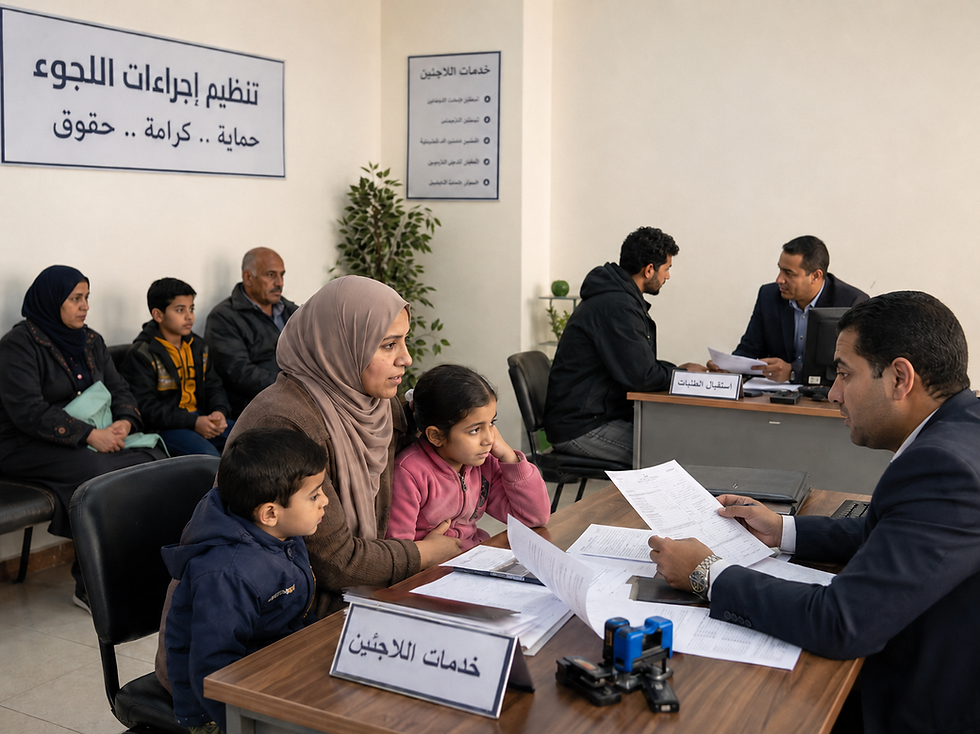
In the packed, echoing corridors of Egypt's Family Courts, thousands of divorced women and estranged fathers gather daily to navigate the difficult, emotionally draining battles of alimony enforcement. While securing a court verdict for child support has historically been a lengthy struggle, the primary crisis begins after the judge’s gavel falls. The introduction of the newly proposed Family Support Fund aims to radically alter this landscape by establishing a direct financial bridge: the state will pay out alimony immediately upon a court ruling, subsequently undertaking the complex task of recovering those funds from the non-compliant party. For the millions of split households relying on these judicial payouts, this legislative shift represents a critical test of whether state intervention can successfully overcome bureaucratic evasion.
The foundational premise of the Family Support Fund is designed around immediate relief, ensuring that ex-wives, children, and dependent parents no longer face months of financial starvation while waiting for courts to trace a father's true income. By digitally linking courts, banks, and employers, the system intends to bypass traditional roadblocks. However, legal experts remain pragmatic about the structural reality, emphasizing that while the draft law looks revolutionary on paper, its actual societal impact is entirely contingent upon its forthcoming executive regulations and its teeth in real-world scenarios.
The true friction point of Egyptian family law has rarely been the statutory language itself, but rather the mechanism of execution. Lawyer Rana Ahmedy believes that the biggest issue surrounding family and child support is not securing a judgment by a court but then having that judgment enforced. She observes that in many instances women may get their judgments; however, the real problem occurs after they have their judgment since the enforcement of that judgment is a long, drawn out, and complicated process.
Ahmedy emphasizes that the success of a new law, regardless of how well designed it may be, will be dependent upon how well the law can enforce itself, including the ability to get those persons who do not comply with the judgment to pay the choices against them. For a mother trying to keep her children in school, a court order without rapid enforcement is little more than ink on a piece of paper.
For mothers navigating the daily fallout of a broken marriage, the financial precarity of divorce is a constant source of stress that directly compromises the stability of their children. Wafaa Mamoun, a divorced mother, shares that the prolonged waiting period between a court order and actual cash matching that order leaves families completely vulnerable. She stresses that children ultimately bear the psychological and material scars of their parents' legal warfare, meaning any delays in immediate financial execution directly impact a child's access to basic necessities, housing, and education. When a court ruling is made, she believes an immediate enforcement must be put in place, otherwise the alimony amount remains just a piece of paper where nothing will actually happen.
Sociologists view this legal bottleneck as a reflection of a deeper, systemic social structure fueled by post-divorce resentment and economic strain. Dr. Samia Khedr, a professor of sociology at Ain Shams University, notes that the conflict inside the courts is rarely just about money; it is a product of many emotional and financial factors that affect people, including feelings of anger and resistance, as well as pressure due to limited economic means. While she believes that the Family Support Fund will help promote a reduction in conflict between the divorced husband and wife, especially with respect to supporting the mother in raising any children they may have, she maintains that financial solutions are not the only answer. She calls for a major media responsibility to generate positive awareness through the channels about what we can accomplish as a society, particularly as rising divorce rates cause the younger generation to increasingly question whether or not to marry.
Ultimately, the grand experiment of the Family Support Fund stands at a crossroads between legislative ambition and institutional inertia. If the fund successfully bridges the gap between judicial orders and swift economic relief, it could redefine the face of social security for vulnerable families across the nation. But if the state's recovery mechanisms falter against the deeply rooted tactics of financial evasion, the fund risks becoming another well-intentioned idea struggling against the stubborn realities of the street.