
Siwa’s Hot Sand Baths: An Ancient Remedy Still Practiced Today
Updated: May 15
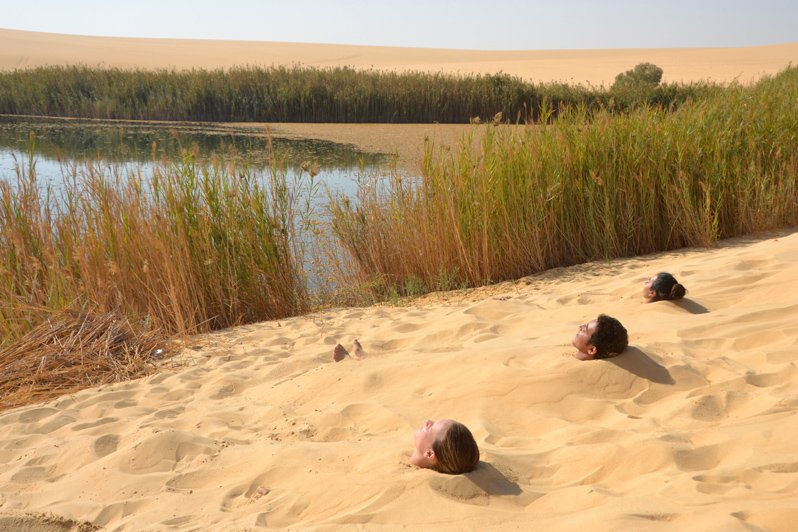
Time passes, remedies change, and medicine advances, yet in Siwa Oasis, the sand remains. As the sun sets over the golden dunes, shallow pits are dug not for ritual or spectacle, but for healing. For generations, Siwans have relied on the desert’s heat as a form of indigenous wellness, burying bodies in hot sand to relieve pain and restore balance in a practice shaped by necessity, belief, and the land itself.
Long before it became a seasonal attraction, sand bathing was a tradition quietly passed down among Siwan families. Adel Mansour, a local tour guide, explained that residents used sand therapy as a treatment long before it was organized into structured programs. “This was how people treated pain when medical services were limited,” he said. Over time, the practice evolved into recovery plans lasting three, five, or seven days, each demanding physical discipline and strict adherence to local rules.
The ritual begins with preparing a shallow pit in sun-heated sand. Patients are buried up to the neck for 10 to 15 minutes, according to Mansour, though he notes that earlier generations tolerated longer sessions. Once removed, patients are wrapped and moved to tents where they rest under controlled conditions. Cold water is strictly prohibited, while warm lemon drinks are consumed in small quantities to prevent shock to the body.
Diet plays a central role in the recovery process. Patients follow a light nutritional routine, with minimal intake during the day. Dinner typically consists of soup, often "maraa", a traditional broth, accompanied by chicken or rabbit. According to Mansour, this simple diet helps the body cope with intense heat and supports the elimination of toxins released during the therapy.
For Sheikh Omar Rajeh, one of Siwa’s elders, the practice reflects the oasis’s long history of self-reliance. He linked sand therapy to decades of limited access to advanced healthcare, which pushed residents toward natural remedies such as herbal medicine and hot sand. The treatment is mainly practiced at Dakrour Mountain during the peak summer months of June, July, and August, when sand temperatures reach their highest levels.
Sheikh Omar explained that the heat opens the body’s pores, allowing toxins to be released. After the burial phase, patients spend up to an hour resting inside tents with limited airflow, wrapped in blankets and given special liquids to assist detoxification.
Recovery continues long after the sand bath ends. For several days, patients are not allowed to swim in springs or salt lakes, take showers, or expose themselves to air conditioners and fans, as the body becomes highly sensitive. On the third day, a traditional massage using olive oil is performed to soothe the muscles and restore balance.
Mohamed Hafez, a local Siwan vendor, added that vinegar is sometimes mixed with the olive oil during the massage. “This helps close the pores opened by the heat,” he said, marking the final step in the healing cycle.
Between the silence of the desert and the intensity of its heat, Siwa’s sand bath pits remain a living expression of indigenous wellness knowledge. Rooted in ancestral experience and sustained by belief in nature’s power, the practice survives not as folklore, but as a locally grounded form of healing. In Siwa, the sand is more than landscape, it is medicine, memory, and an enduring relationship between people and place.
Dermatologist Dr. Ahmed Taha explains that while Siwa’s sand therapy is rooted in long-standing local traditions, the extreme heat of the desert can also pose serious medical risks if not carefully managed. During peak summer afternoons, surface sand temperatures may reach between 65 and 75 degrees Celsius. According to Dr. Taha, human skin can only tolerate temperatures around 50 degrees Celsius for a short period before first-degree burns begin to appear, while exposure above 60 degrees can cause second-degree burns within seconds of direct contact. He noted that the danger during sand burial becomes greater because the body is fully covered, ventilation is limited, and movement is restricted, making it difficult for participants to quickly escape the heat. “We sometimes see burns and blisters on the back, shoulders, and lower body, especially among people with diabetes or reduced skin sensation,” he said.
To reduce these risks, Dr. Taha stressed the importance of following strict precautions before and after burial sessions. Experienced practitioners in Siwa often test the sand temperature carefully and limit exposure to no more than 10 to 15 minutes for first-time visitors. Patients are advised to remain hydrated before entering the sand and to keep their heads shaded to avoid heatstroke. Dr. Taha also warned against drinking ice-cold water or taking cold showers immediately after treatment, explaining that sudden cooling can place dangerous stress on blood circulation and the heart. Instead, he recommends gradual cooling in shaded areas, drinking room-temperature water slowly, and resting for several hours after the session. According to him, individuals with heart disease, kidney problems, severe hypertension, pregnancy, open wounds, or advanced diabetes should avoid the treatment entirely due to the health risks associated with extreme heat exposure.